

![[Original Plans for the Aswan Dam - Low Dam Upgrades.] Aswan Dam. Hyro [sic] Electric Project. Alternative Scheme. Submitted by Westinghouse, Baldwin & Associates, &c.](https://www.rosiehodgebooks.co.uk/wp-content/uploads/2025/10/IMG_5455.png)
![[Original Plans for the Aswan Dam - Low Dam Upgrades.] Aswan Dam. Hyro [sic] Electric Project. Alternative Scheme. Submitted by Westinghouse, Baldwin & Associates, &c. - Image 2](https://www.rosiehodgebooks.co.uk/wp-content/uploads/2025/10/IMG_5453.png)
![[Original Plans for the Aswan Dam - Low Dam Upgrades.] Aswan Dam. Hyro [sic] Electric Project. Alternative Scheme. Submitted by Westinghouse, Baldwin & Associates, &c. - Image 3](https://www.rosiehodgebooks.co.uk/wp-content/uploads/2025/10/IMG_5454.png)
![[Original Plans for the Aswan Dam - Low Dam Upgrades.] Aswan Dam. Hyro [sic] Electric Project. Alternative Scheme. Submitted by Westinghouse, Baldwin & Associates, &c. - Image 4](https://www.rosiehodgebooks.co.uk/wp-content/uploads/2025/10/IMG_5452.png)
—– [Original Plans for the Aswan Dam – Low Dam Upgrades.] Aswan Dam. Hyro [sic] Electric Project. Alternative Scheme. Submitted by Westinghouse, Baldwin & Associates, &c. [No place.] [No imprint.] 1947
£250.00
Slim imperial 8vo. (circa 28 x 20cm); original drab wrappers titled in printed black to upper cover, stapled; [iv], 5-59 + [i], with additional plans and photographs comprising 2 printed graphs and 4 printed folding plans, also with a loosely inserted bifoliate in Arabic, translating as “Aswan Dam Electrification Project” which outlines, in columns, projected work and costs, including equipment for butterfly gates, pipes, waterways etc. etc.; with 10 full-page plates after photographs printed in monochrome to the rear; a remarkable survival, externally very sound and good with light soiling, internally crisp and clean throughout save an old water-stain affecting the document throughout at the upper margin, inner corner, mainly affecting the first couple and last 13 leaves, but never encroaching on text or illustration; rare.
Contents consist of Section 1 – Summary of Conclusions; Section II Report on the Proposed Scheme; Section III: Turbine Performance; Required Reservoir Levels for Maximum Flood Discharges; Discussion of ‘Report on Economic Utilization of Energy available from the Aswan Dam and Nile Barrages Hydro-Electric Schemes’; Channel Alignment Study; Cost Estimate Tabulations including Rock excavation diagram and Estimates; Bills of Material for Machinery; Electrical One – Line Diagram; Tailrace Curve at Various Discharges; Aswan Reservoir Levels and Storage at the Period of Final Emptying, for the years 1933 to 1946; Sectional View and Plan of Proposed Powerhouse; Statistics of actual maximum Water Levels Downstream from Dam; Section IV, Photographic Views of Similar Equipment Built By – The Westinghouse Electric Company and the Baldwin Locomotive Works.
Egypt’s Aswan Dam on the Nile River, about 1,000 km south of Cairo, was built between 1899 and 1902 by the British during their period of colonial administration in Egypt. Its purpose was to control seasonal Nile River flooding and to store water for irrigation to support the country’s agricultural economy. By the 1940s there was a growing requirement to incorporate hydroelectric power to meet rising energy needs, to support industrialisation (especially fertiliser production and textile manufacturing) and to generate electricity for Cairo and Alexandria. The dam had already been raised twice by the 1930s but in the 1940s the plan was to harness the flow of the river more effectively for electrical generation.
Baldwin Westinghouse refers to a partnership between two giants of American industry, Baldwin Locomotive Works and Westinghouse Electric Coroporation, a collaboration which began in the late nineteenth century to advance AC railway electrification. The former was a leading manufacturer of steam locomotives, based in Philadelphia; the latter a pioneer in electrical engineering and alternating current technology.
John Aird & Co., a British firm, was the principal company involved in the hydroelectric project for the Aswan Dam in the 1940s. Westinghouse Electric Corporation provided the “entire power” for the project and was a consultant for the Electrification Project.
Unlocated in WorldCat or elsewhere, including the commercial market, at the time of cataloguing.
Out of stock
Related Products
-
![["Hold to Light" theatre handbill.] Wedding Eve. Comic Opera Every Evening at 8.15. The Trafalgar Square Theatre.](https://www.rosiehodgebooks.co.uk/wp-content/uploads/2025/10/IMG_4462-600x800.png)
—– [“Hold to Light” theatre handbill.] Wedding Eve. Comic Opera Every Evening at 8.15. The Trafalgar Square Theatre. Nottingham; Grover & Co. 1892
£120.00 -
![Antes [to the cover, otherwise untitled, with the dedication, Für Billy and Alan Davie.]](https://www.rosiehodgebooks.co.uk/wp-content/uploads/2026/03/IMG_8207-600x547.png)
ANTES, Horst (artist). Antes [to the cover, otherwise untitled, with the dedication, Für Billy and Alan Davie.] Venedig Edizioni del Cavallino. 1973
£180.00 -

Oberammergau Passion Play
BLACKBURN, Henry. Art in the Mountains. The Story of the Passion Play. London; Sampson, Low, Marston & Co. 1870£80.00 -
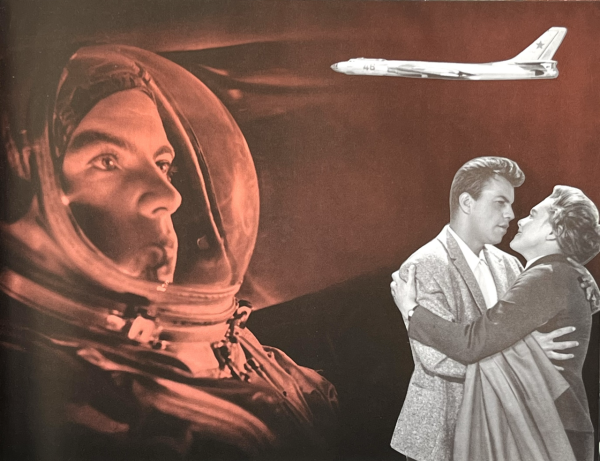
Soviet Cinema
KAMAROV. Catalogue of Soviet Feature Film. 1963. Mosca; Sovexportfilm. 1963£120.00