

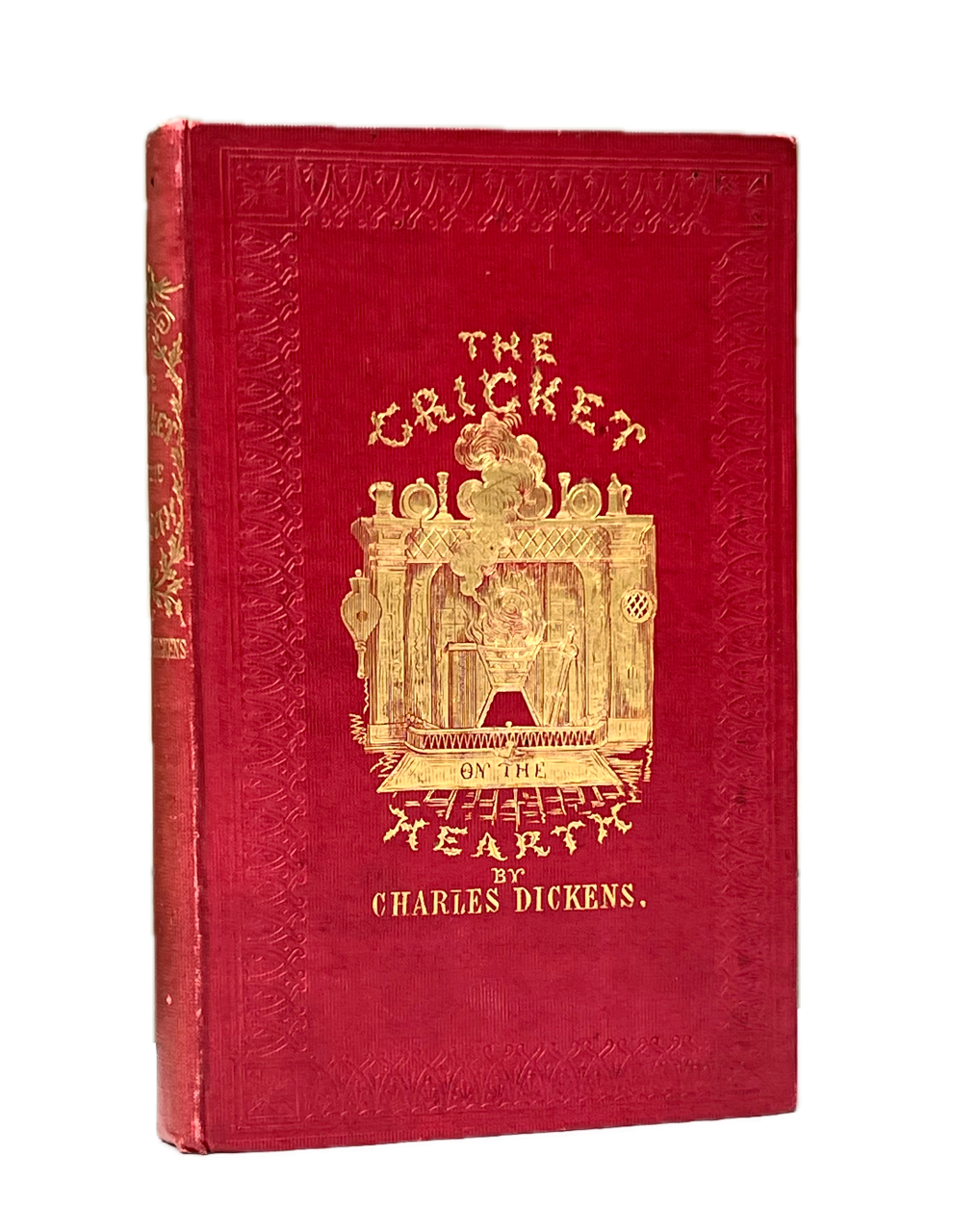
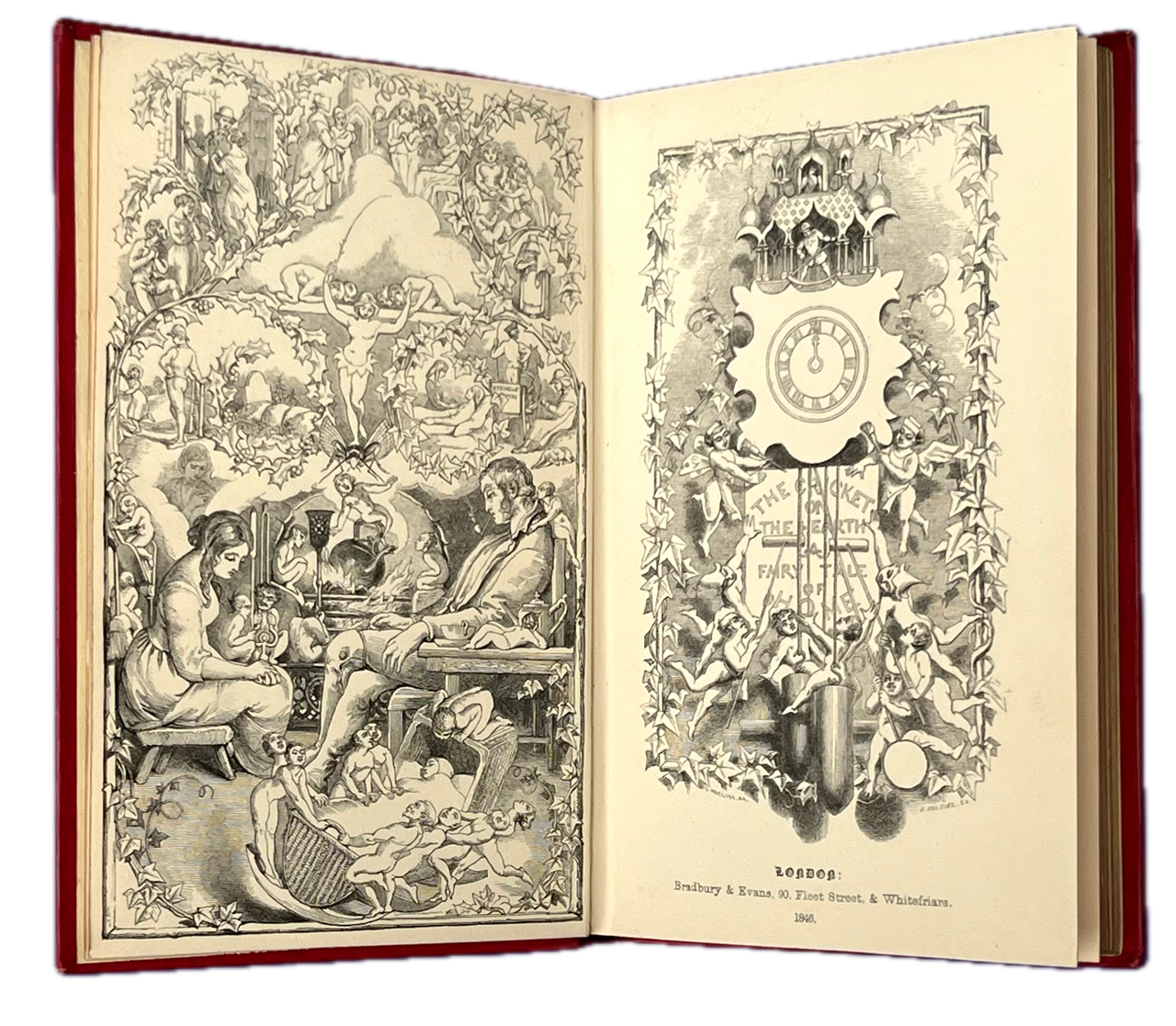
DICKENS, Charles (author). Cricket on the Hearth. A Fairy Tale of Home. London Printed and Published for the Author by Bradbury & Evans, 90 Fleet Street, and Blackfriars. 1846
£750.00
Demi 8vo.; publisher’s red finely ribbed cloth with blind-stamped decorative panel to both boards enclosing, to upper cover, a pictorial title vignette in gilt, spine lettered gilt, all edges gilt, pale yellow endpapers; pp. [viii] + 174 + [2], publisher’s adverts.; with additional elaborate etched pictorial title-page and frontispiece, both by Daniel Maclise, on heavier stock, and engravings throughout by artists including Richard Doyle and Edwin Landseer; a very crisp, smart and near fine copy with just a touch of fading to spine and mild bruising to spine ends, internally crisp and immaculate, without ownership marks, and just one tiny and incidental hole to inner upper hinge.
First edition, second issue, with the advertisement leaf to the rear bearing a three-line reference to the forthcoming New Edition of Oliver Twist, rather than a two-line one
This popular Christmas novella was the third in a series of five individual Christmas tales by Dickens, now known as ‘The Christmas Books’, which came out over several years; the others being “A Christmas Carol” (1843); “The Chimes” (1844); “The Battle of Life” (1846) and “The Haunted Man and the Ghost’s Bargain” (1848). Despite bearing the date of 1846, this title was actually published on 20th November 1845.
The work embraces the heart-warming themes of fidelity, love, and the sanctity of home and offers a positive message on the possibility of redemption. Dickens himself described it as “quiet and domestic […] innocent and pretty”. Unlike two of its companion books “The Christmas Carol” and “The Chimes” the story avoids overt social comment and criticism and focuses on the personal, looking at private morality. The physical cricket on the hearth here is a symbol of domestic happiness, chirping when the environment is happy and falling silent at times of distress.
In stock
Related Products
-
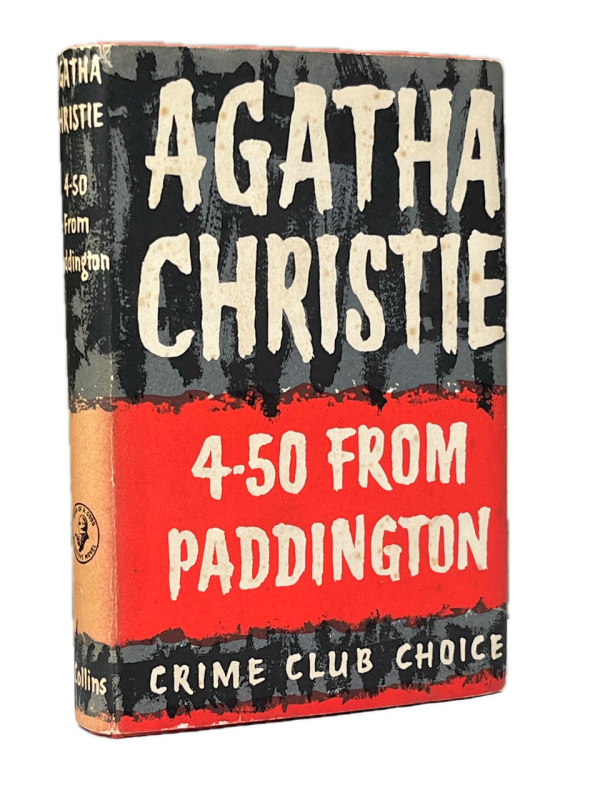
CHRISTIE, Agatha (author). 4.50 From Paddington. London Published for The Crime Club by Collins. 1957
£180.00 -
![A Book of Mediterranean Food [and] French Country Cooking.](https://www.rosiehodgebooks.co.uk/wp-content/uploads/2026/03/IMG_8062-600x800.png)
First combined edition.
DAVID, Elizabeth (author). John MINTON (illustrator). A Book of Mediterranean Food [and] French Country Cooking. London; The Cookery Book Club. 1968£130.00 -
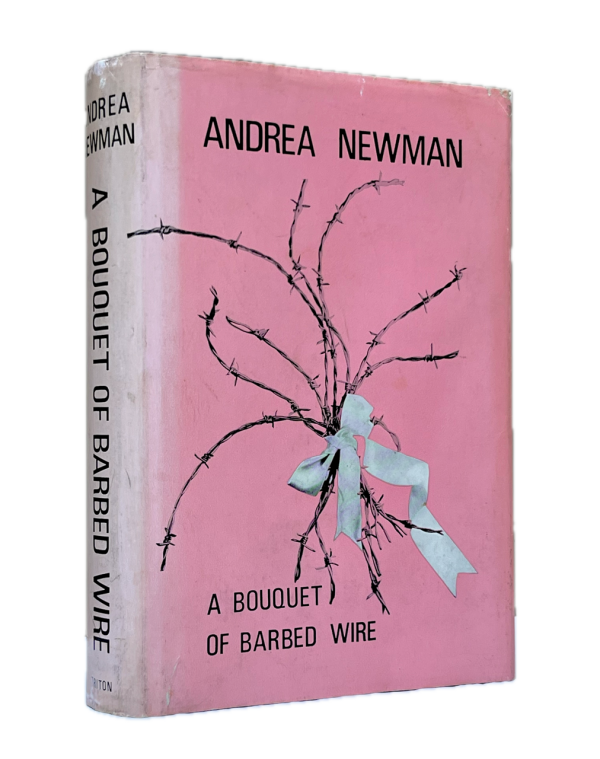
NEWMAN, Andrea. A Bouquet of Barbed Wire. London A Triton Book. 1969 Signed
£150.00 -
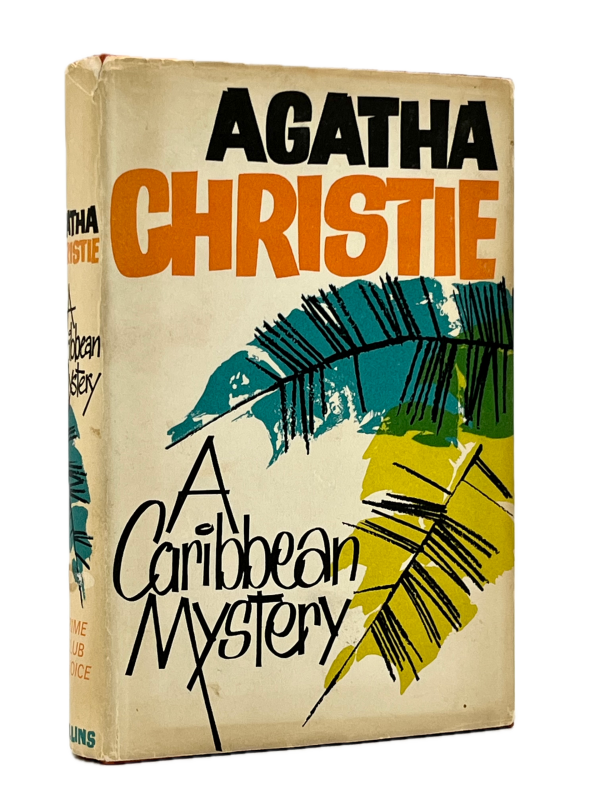
CHRISTIE, Agatha (author). A Caribbean Mystery featuring Miss Marple. London Collins Crime Club. 1964
£45.00