

![Life and History of Betty Bolaine [Late of Canterbury] A Well Known Character for Parsimony and Vice Scarcely equalled in the Annals of Avarice and Depravity. Interspersed with Poetry.](https://www.rosiehodgebooks.co.uk/wp-content/uploads/2025/09/IMG_4127.png)
![Life and History of Betty Bolaine [Late of Canterbury] A Well Known Character for Parsimony and Vice Scarcely equalled in the Annals of Avarice and Depravity. Interspersed with Poetry. - Image 2](https://www.rosiehodgebooks.co.uk/wp-content/uploads/2025/09/IMG_4126.png)
![Life and History of Betty Bolaine [Late of Canterbury] A Well Known Character for Parsimony and Vice Scarcely equalled in the Annals of Avarice and Depravity. Interspersed with Poetry. - Image 3](https://www.rosiehodgebooks.co.uk/wp-content/uploads/2025/10/IMG_5121-scaled.png)
Parsimony & Vice.
[BURGESS, Elizabeth (author)] Life and History of Betty Bolaine [Late of Canterbury] A Well Known Character for Parsimony and Vice Scarcely equalled in the Annals of Avarice and Depravity. Interspersed with Poetry. London Printed and Sold for the Author, by J. Saffery; also by Tipper and Richards, Leadenhall street; Lane, Newman, and Co. ditto and H.P. Symonds, Paternoster-row. 1805
£850.00
8vo.; in 12s; early nineteenth-century half tan roan over marbled paper boards, flat spine with double-ruled bands in gilt and onlaid deep red label lettered in gilt; pp. [iv], 5-67 + [i]; with etched portrait frontispiece of the subject of the biography, “Betty Bolaine, late of Canterbury”, a woodcut cherub vignette to p. iv, and other letterpress brackets and details; an excellent copy, both inside and out, with light edge-rubbing and a tiny sliver of loss to head of spine, internally very good, fresh, and sound without ownership marks or inscriptions, some speckling to edges of book block, a diffuse fox-mark to title (15mm) but otherwise fresh, sporadically slightly tightly trimmed at the lower edge, but not catching signatures; rare.
First edition, as published by the author herself, with the dated title-page. It was also republished in the same year by W.S. Grigg of Canterbury and went into numerous editions throughout the nineteenth century, although all are elusive. Later editions in general did not include the engraved portrait frontispiece.
Elizabeth Bolaine (1723-1805), whose death coincided with the publication of this account, was a notorious character in her day, who earned the moniker “the Canterbury miser” for her extreme avarice. She was born into comfortable circumstances but chose to lead her life in squalor denying herself to the extent of eating mouldy food, eschewing personal hygiene, and wearing black rags, while stealing, purloining and taking advantage of others to maintain her frugality. Her outlandish costume, depicted in the portrait frontispiece, consisted of a patchwork of bed linen topped with an old chip hat she allegedly found on a dunghill.
At her death she bequeathed an estimated fortune of £20,000, which she left to the Prebendary of Canterbury, cutting out of her will all who had hoped to inherit, one of whom (it is purported) was the author of this work. There was public rejoicing at her funeral as a response to her exceptional avarice and mean-spiritedness, and no-one wore black.
Elizabeth Burgess’s biography, interspersed with original poetry capsulizing aspects of Bolaine’s existence, became a titillating and popular read, reflecting her contemporaries’ fascination with those who defied social norms and led odd or whimsical lives.
Only 4 copies of the first edition located on WorldCat (B.L.; B.L. Ref; Yale and New York Public Library). Only 1 copy listed on Library Hub (BL).
Bound after:
TOPHAM, Edward, Esq. (author). The Life of the late John Elwes, Esquire, Member in Three Successive Parliaments for the County of Essex. First published in the Paper of The World. London: Printed for James Ridgway, No. 170, Piccadilly, Opposite Bond Street. 1805.
In 8s, pp. [iv] + 103; with folding stipple-engraved portrait roundel of the author as frontispiece by J. Russell, R.A., engraved by P.W. Tomkins; with long folding, 5-panel, engraved family tree of the Elwes dynasty tipped-in before the text; very clean and fresh throughout with some light dusting, occasional inconsequential marking and some spotting to edges of book block.
Twelfth edition, corrected and enlarged. To which is added An Appendix, entirely new.
John Elwes (1714-1789) was another infamous miser who it is sometimes suggested was the inspiration for Dickens’s Scrooge. A complex character he was known to extend generous handouts to friends alongside demonstrating extreme parsimony, epitomised by living in rags, eating rancid food (including a rat’s head found in a river), and going to bed before sundown to save on candles.
In stock
Related Products
-
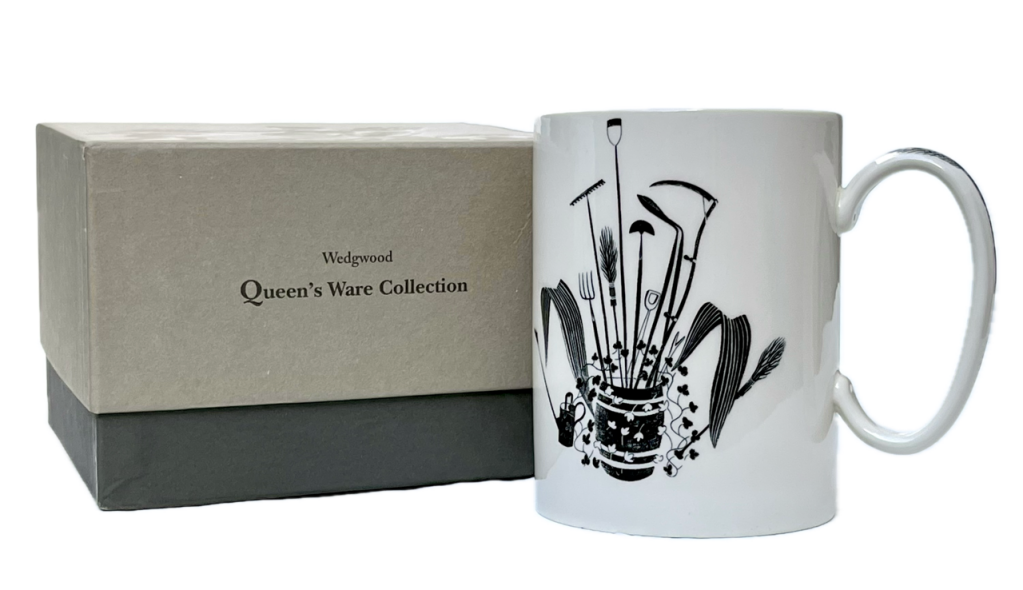
[RAVILIOUS, Eric, designer.] ‘Garden Implements’ mug. [London] Wedgewood, Queen’s Ware Collection.
£120.00 -
![["Hold to Light" theatre handbill.] Wedding Eve. Comic Opera Every Evening at 8.15. The Trafalgar Square Theatre.](https://www.rosiehodgebooks.co.uk/wp-content/uploads/2025/10/IMG_4462-768x1024.png)
—– [“Hold to Light” theatre handbill.] Wedding Eve. Comic Opera Every Evening at 8.15. The Trafalgar Square Theatre. Nottingham; Grover & Co. 1892
£120.00 -
![[A pair of handmade Victorian optical shades.]](https://www.rosiehodgebooks.co.uk/wp-content/uploads/2026/08/IMG_0267-1024x832.png)
Optical toys
____ [A pair of handmade Victorian optical shades.] 1870s.£550.00 -
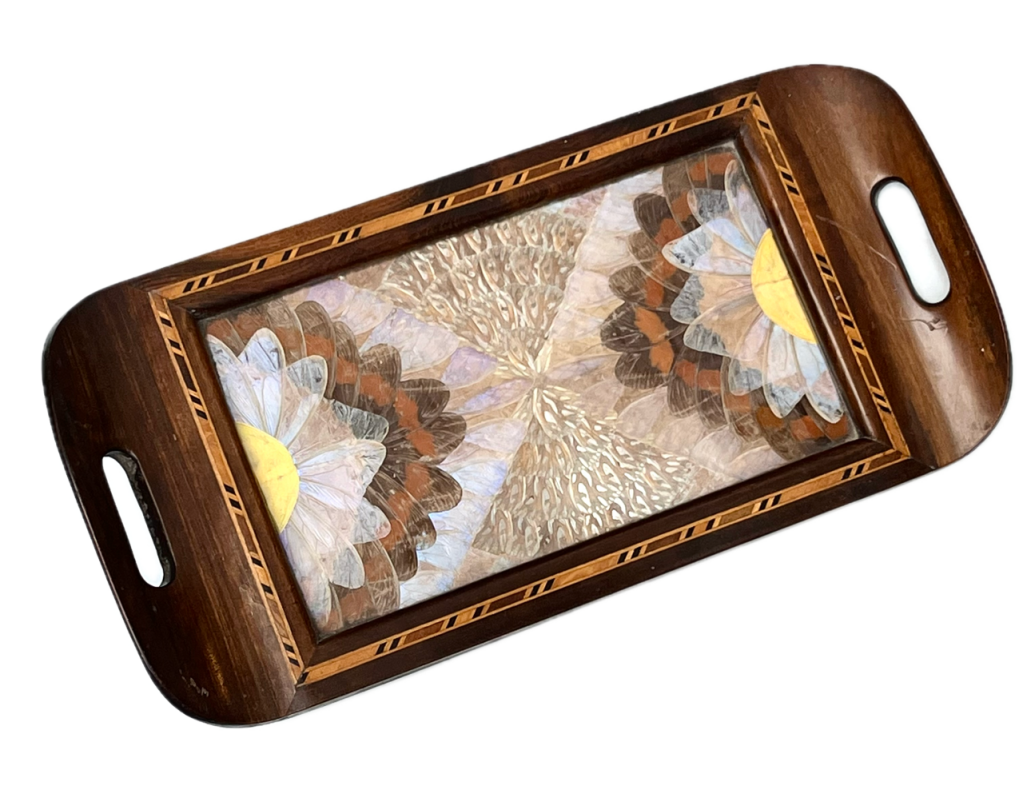
Art Deco
—– 1930s’ Brazilian butterfly-wing drinks’ tray. Rio [de Janeiro], Brasil. Zitrin Irmaos. [1930s]£95.00