

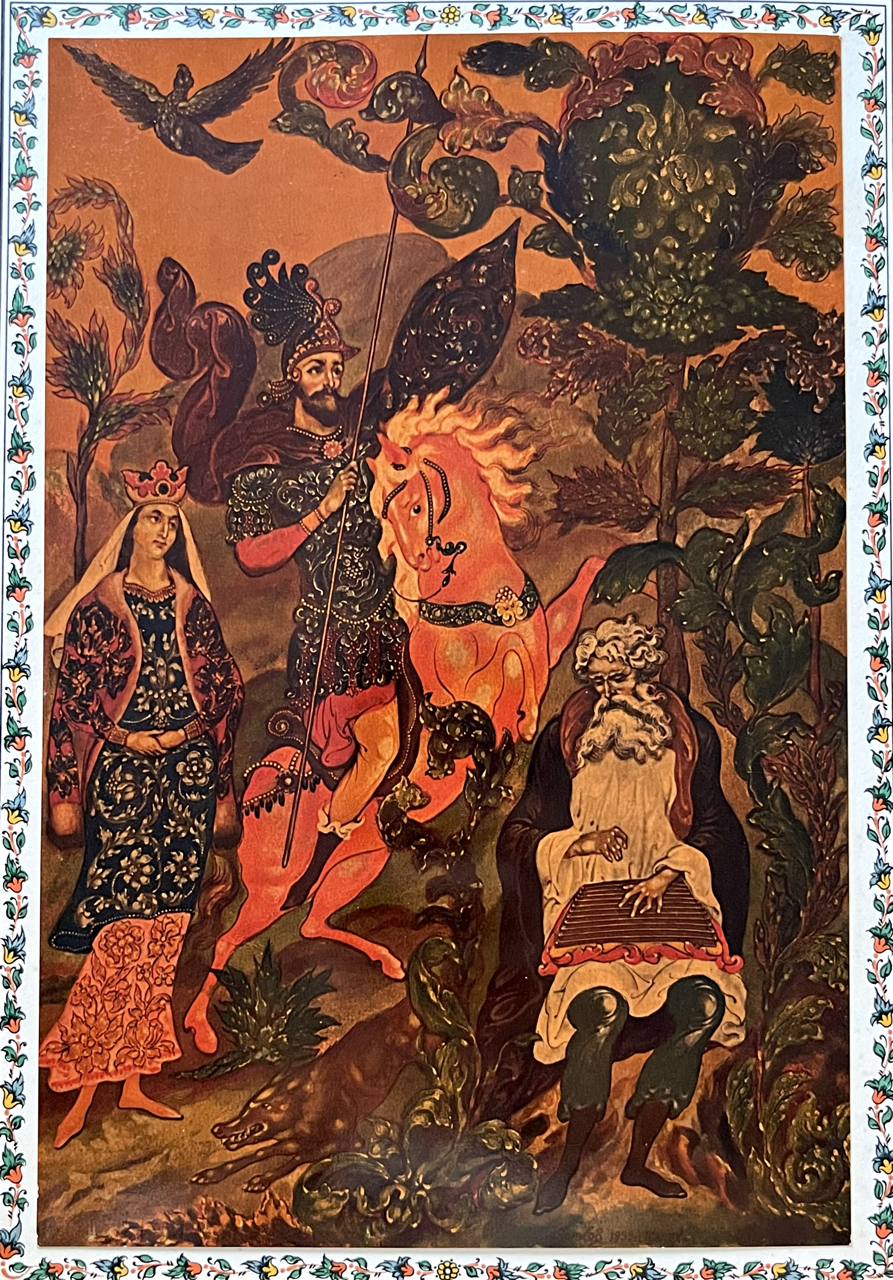
RZHYGOJ, V. and S. SHAMINOGO. Slovo o polku Igoreve (The Tale of Igor’s Campaign). Moscow Academia 1934
£850.00
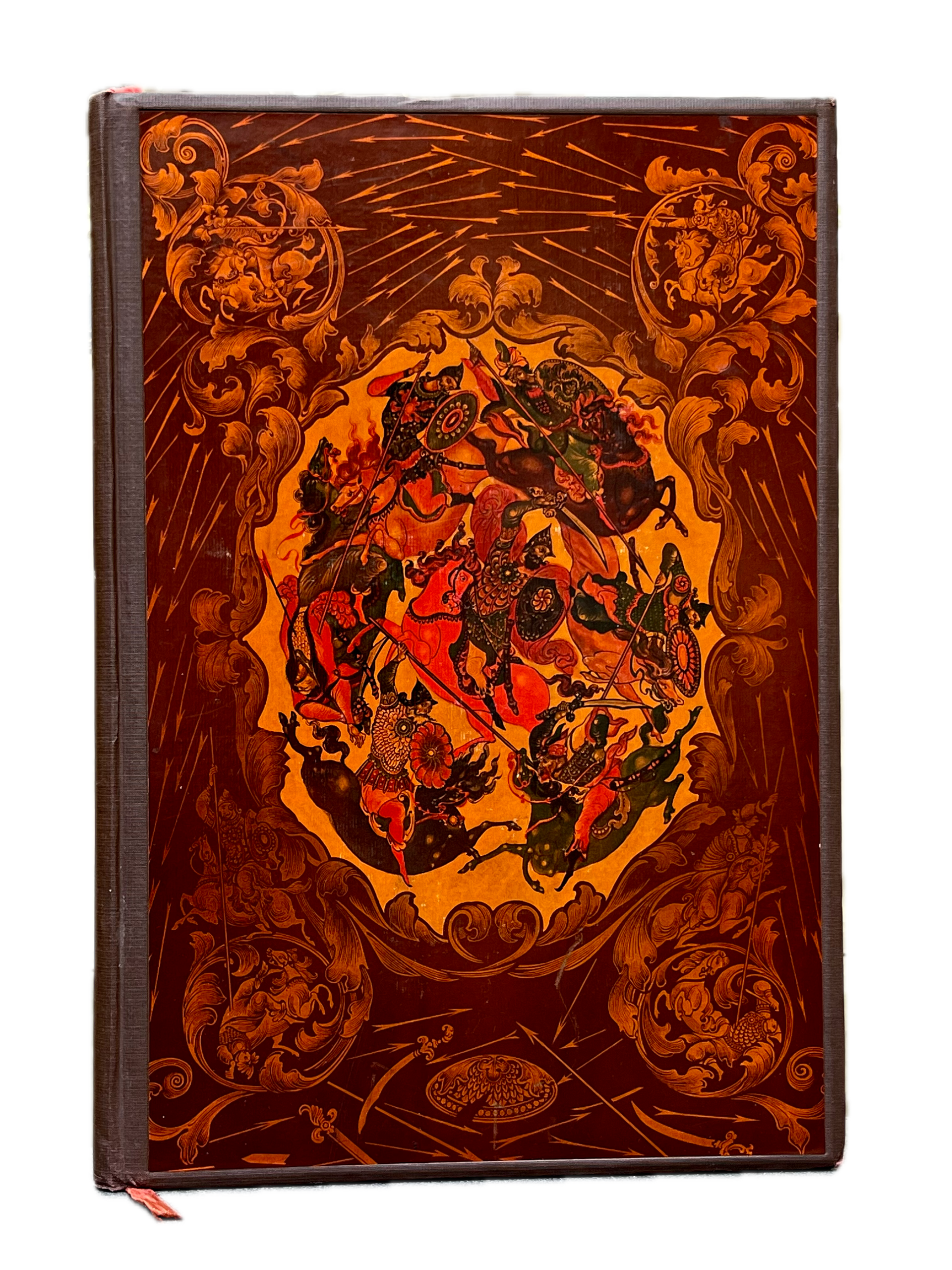
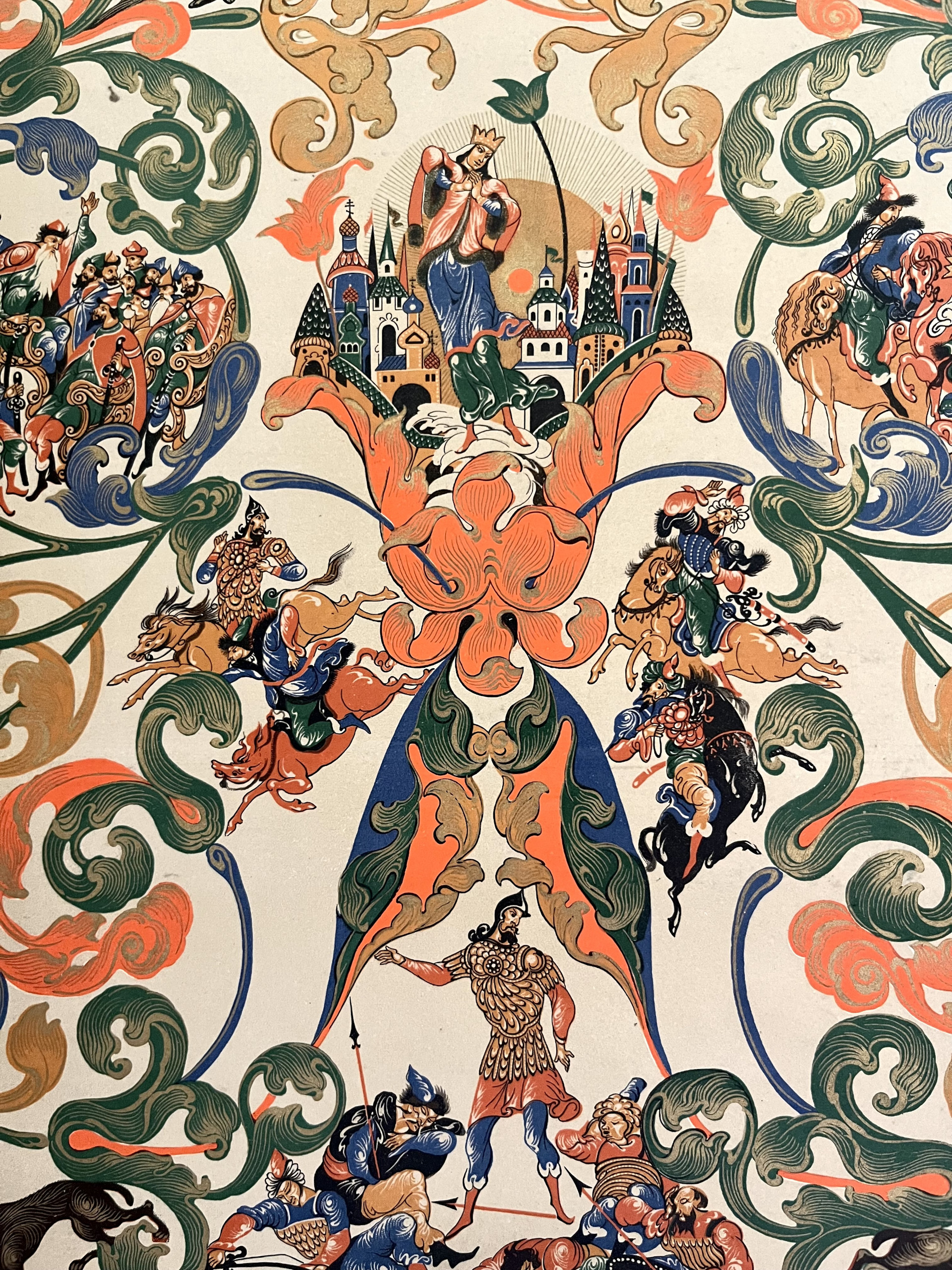
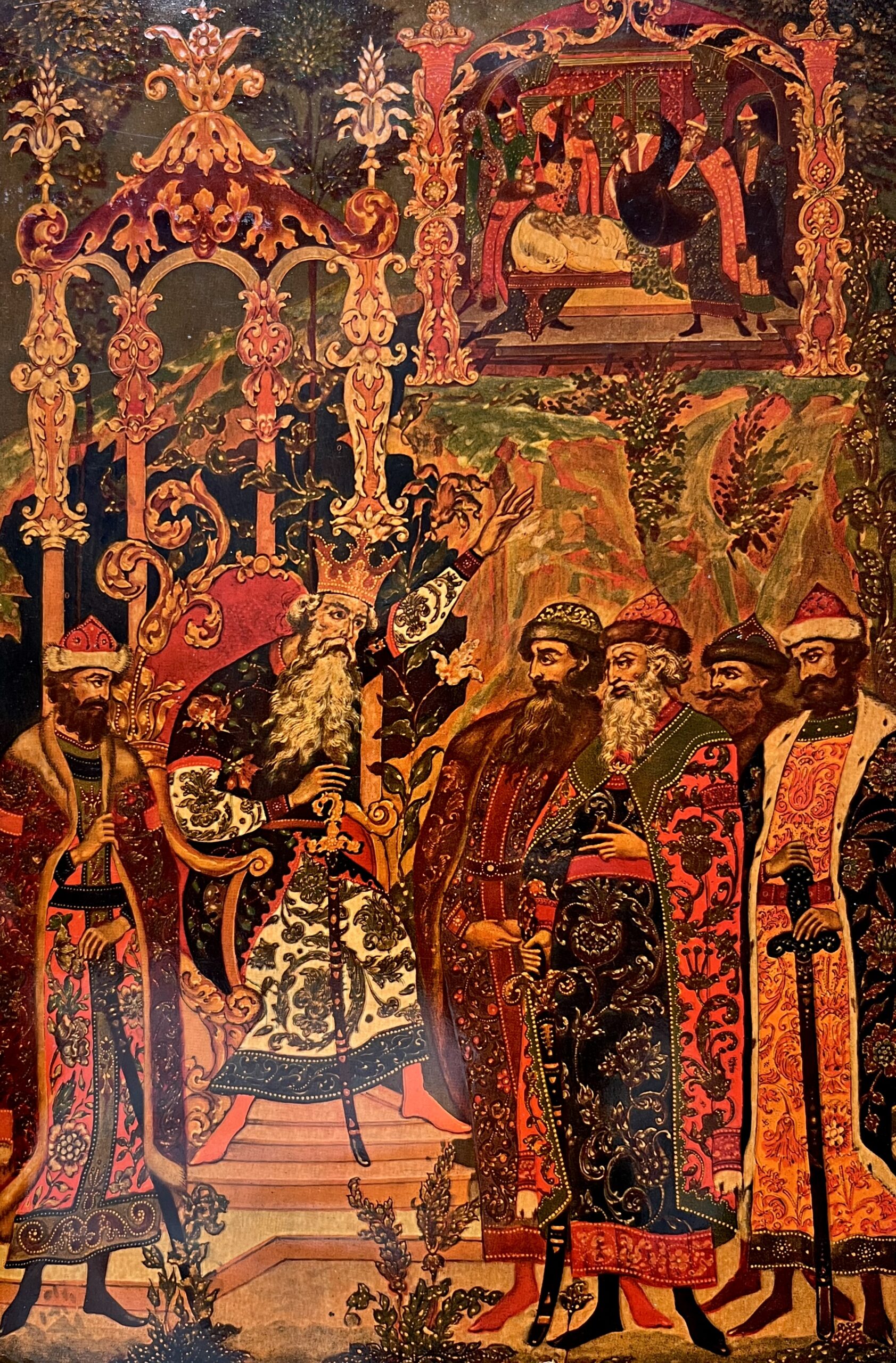
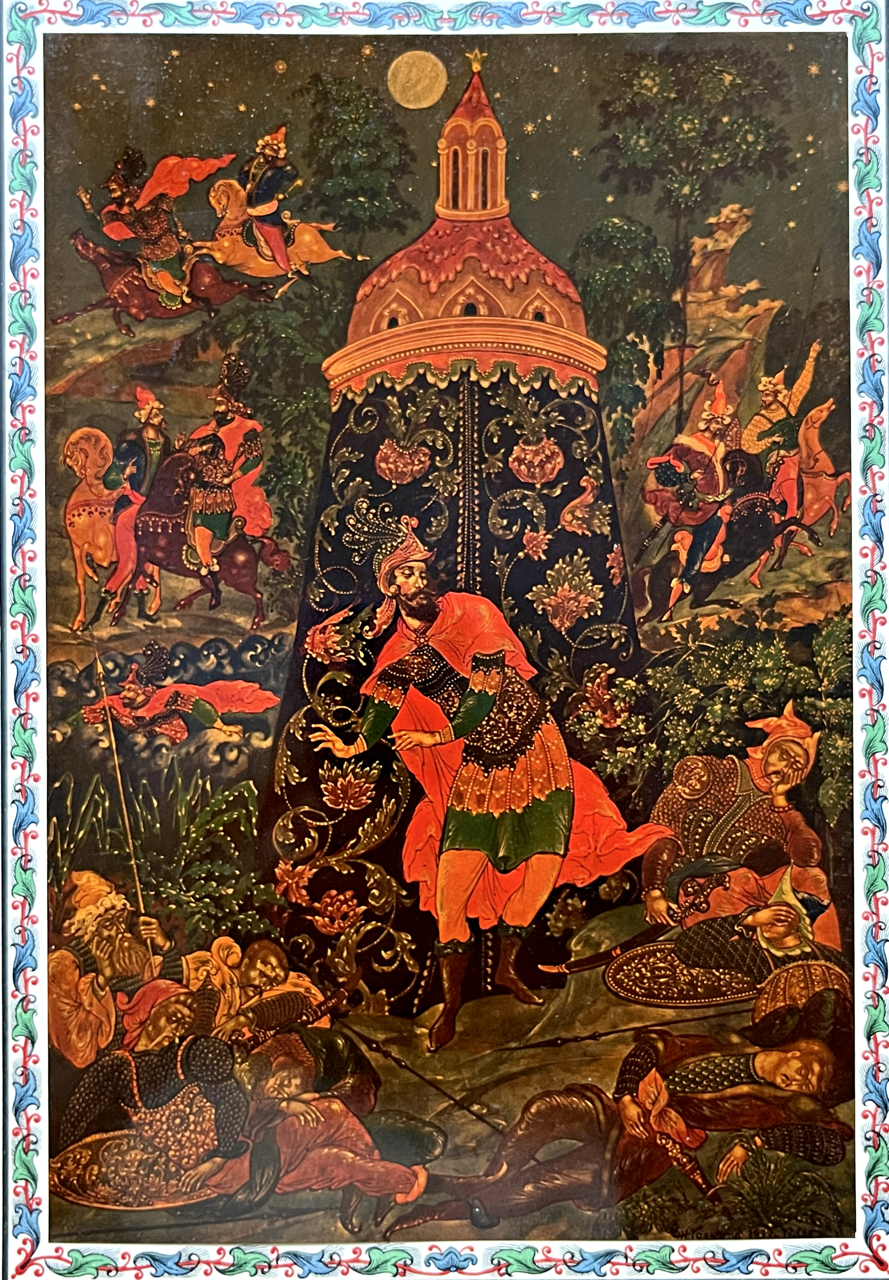
Elephant folio; original chestnut brown cloth over heavy bevelled boards with full-size onlaid colour-printed glossy plates to each cover in the Palekh style, with double-page, decoratively rococo, endpapers printed in colours and publisher’s light green cloth inner hinges and original pinkish-red silk ribbon marker, edges uncut, housed in the remains of the rare original card box, existing now as a hinged brown board chemise with onlaid pictorial label to upper cover and paper price label to lower one; pp. 49 + [iii]; with striking title-page in green, orange, yellow and black with floral decorative border design, a total of 19 attractively designed chapter-headings, tailpieces, and initials, of which 6 are printed in colours; initials and other lettering in red, and colophon in black and red, together with 10 fine full-page, and impressive, highly glossed colour-printed plates by Ivan Golikov in the varnished Palekh style, all mounted-at-large within colour-printed floral borders; a wonderful copy with only tiny wear to forecorner tips and a bruise to heel of spine, internally generally fresh and clean throughout with only occasional minor dust-marking, faint and unavoidable offsetting from plates to text, and a minor bruise throughout to lower inner corner; scarce and beautiful, without any of the previously found scratching to striking covers due to the presence of the protective chemise; rare in the remains of the original presentation box.
First edition, with text in Old Russian. Variously translated as “Host of Igor’s Lay”, “The Song of Igor’s Campaign” and “The Lay of the Host of Igor”, this anonymous epic verse originally appeared in the Old East Slavic language. It relates a story of the unsuccessful campaign of Igor Svyatoslavich against the Polovtsians of the region of the Don River. Academics agree that the poem is historically authentic and dates to the late 12th century. When the tale was adapted by Alexander Borodin to the stage it became one of the greatest classics of Russian opera.
Ivan Golikov, Honourable artist of Russia, was born in Moscow in 1887 to an artistic family of icon painters. When he was 7 years old his family relocated to the Palekh village where he trained in various icon studios, later working in a range of theatres producing scenery for large-scale productions and earning notoriety as a book illustrator. He was the founder of the Palekh Art School. His works are held in museums throughout Russia.
The Palekh miniature, or Russian lacquer art miniature, is a traditional form of painting on a folkloric theme, usually executed with bright paints on a black background on highly varnished objects made from papier maché, such as boxes and cigarette cases.
In stock
Related Products
-
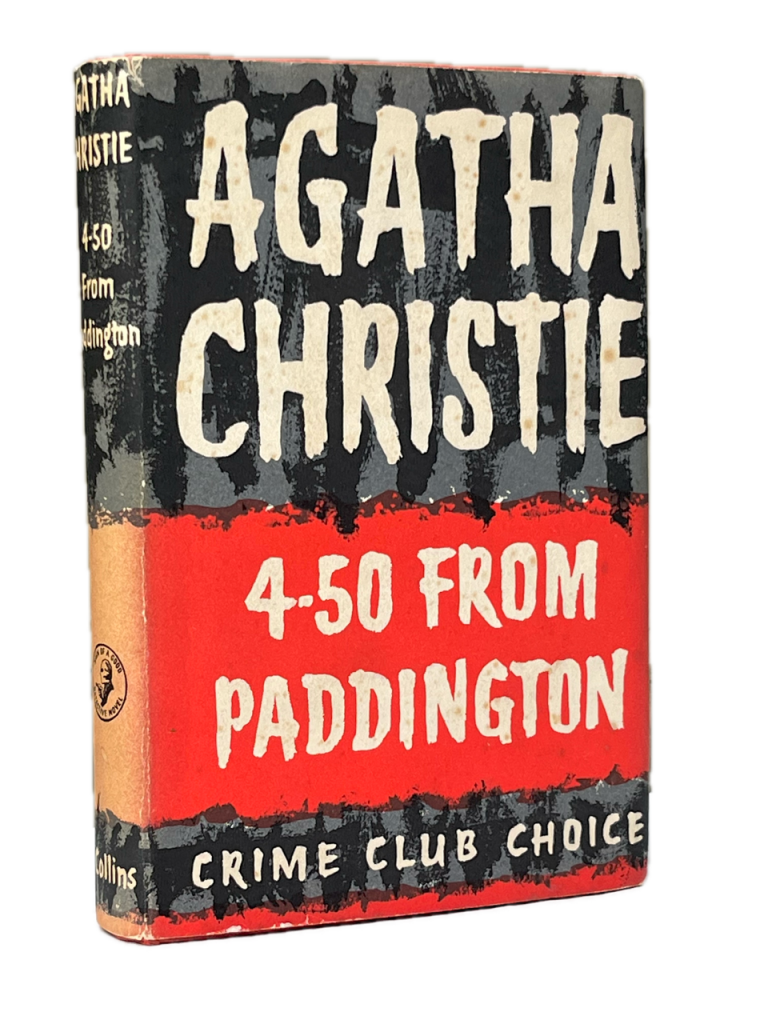
CHRISTIE, Agatha (author). 4.50 From Paddington. London Published for The Crime Club by Collins. 1957
£180.00 -
![A Book of Mediterranean Food [and] French Country Cooking.](https://www.rosiehodgebooks.co.uk/wp-content/uploads/2026/03/IMG_8573-768x1024.png)
First combined edition.
DAVID, Elizabeth (author). John MINTON (illustrator). A Book of Mediterranean Food [and] French Country Cooking. London; The Cookery Book Club. 1968£130.00 -
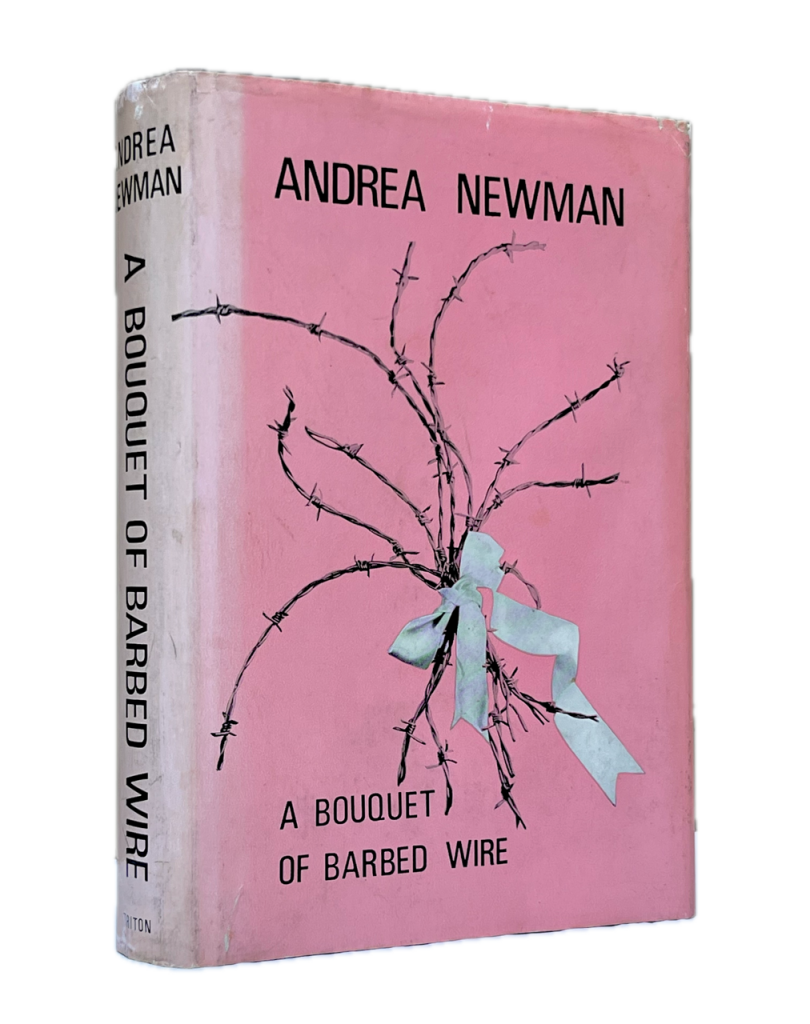
NEWMAN, Andrea. A Bouquet of Barbed Wire. London A Triton Book. 1969 Signed
£150.00 -
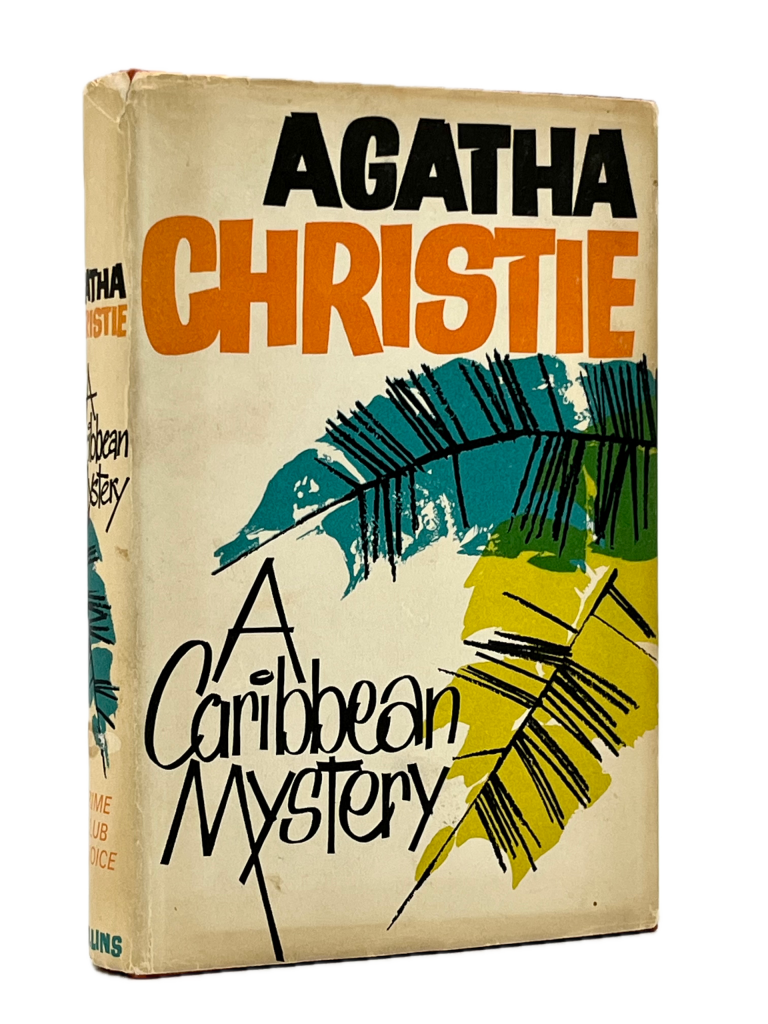
CHRISTIE, Agatha (author). A Caribbean Mystery featuring Miss Marple. London Collins Crime Club. 1964
£45.00